
About me
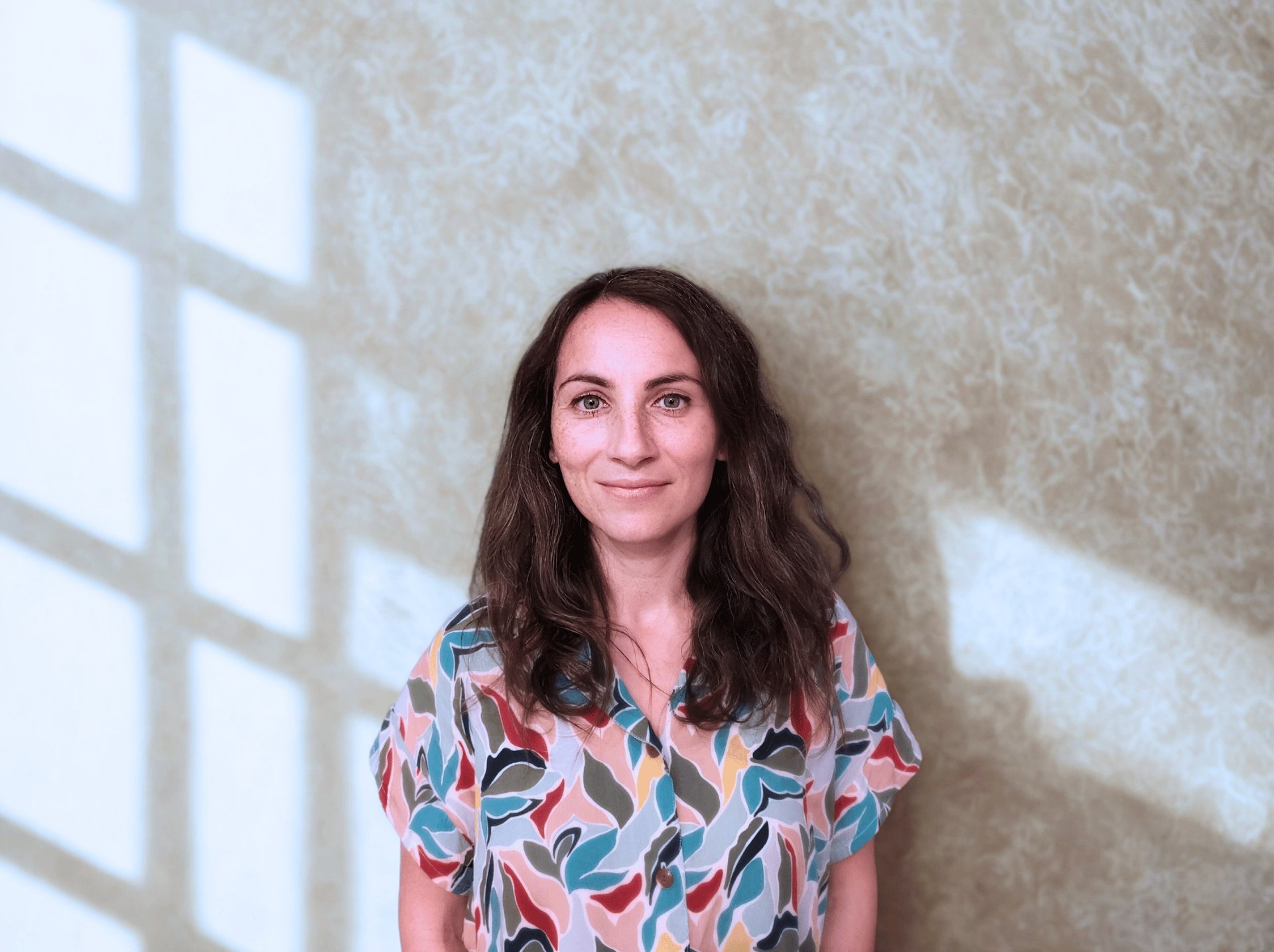
I’m Sabine Tendas, a Counselling Psychologist, Certified Transactional Analyst Psychotherapist, and Dance Movement Therapist working in Brighton and online. I offer creative, body-based psychotherapy for adults and children, in Brighton and online. I have a deep interest in identity, belonging, and the lived experience of moving between cultures, both externally, and internally.
I was born in Germany and raised in Sardinia, and I have lived and worked in Spain, Brazil, and the UK. Living across languages and cultures has shaped my therapeutic approach. Questions such as Who am I? and Where do I belong? do not live only in thought. They live in the nervous system, in posture, in movement, and in the ways we reach for, or retreat from, connection.
My work is informed by migration and transition, and by the subtle ways displacement can stretch identity, disturb a sense of home, and also open new possibilities. Many of the people I work with live between worlds, carrying more than one language, culture, or inner landscape. Therapy can become a place where these parts meet, are recognised, and begin to feel coherent.
At the heart of my approach is a belief that the body and psyche are not separate. The body carries personal history and relational patterns, and it deserves to be listened to, not managed. Through words, movement, and relational presence, we build a space where experience can be felt, symbolised, and integrated.
I work relationally, with care and attentiveness, guided by the Transactional Analysis principle of OKness: I’m OK, You’re OK.
If you are navigating life between countries, cultures, identities, or inner transitions, I offer a steady space to explore at your pace, and to reconnect with your body, your sense of self, and what feels like home.
I work with adults, children, and families, offering individual and couple therapy in Brighton and online. At the heart of my work is a simple intention: to meet you where you are, with respect for your rhythm, your history, and the way you have learned to be in the world.
I listen for the human story beneath labels. I understand symptoms not as defects to remove, but as signals that carry meaning, often shaped by relationship, adaptation, and survival. In therapy, we make space for these experiences to unfold with presence, curiosity, and care, so that new understanding, choice, and possibility can emerge.
How I work
My Background
My work as a Counselling Psychologist in Brighton, offering psychotherapy in person and online, has been shaped by supporting people across diverse settings, cultures, and life circumstances. This breadth keeps therapy grounded in real lives, and helps me work flexibly with what each person brings.
I have worked with children in primary school settings, including children with special educational needs, and I have experience supporting people with autism and physical disabilities. I have also worked in residential care and mental health settings, as well as with families and couples.
A central thread in my practice is women’s psychology. I have supported underprivileged women in Brazil, and survivors of domestic violence and abuse in Brighton through the Brighton Women’s Centre. I also have experience working with eating disorders and body image distress, and with trauma and addiction in group therapy, integrating movement, writing, and talking therapy.
I have also supported expats in London, and I remain deeply interested in identity and belonging, and in how living between cultures shapes the nervous system, relationships, and the sense of home.


Areas of Focus
Clients often come to me for because something feels stuck, unsettled, or hard to name. This may show up as anxiety, overwhelm, panic, or shutdown, or as a nervous system that cannot fully rest. It can also include trauma, including developmental and relational trauma, and the attachment patterns that shape how we do closeness, boundaries, trust, and separation.
I also work with identity confusion, belonging, and the lived experience of moving between cultures, where the question “Who am I?” can be felt in the body as tension, collapse, restlessness, or disconnection. Many clients seek support with body image distress and eating difficulties, where food, control, perfectionism, and shame become ways of coping. Alongside these themes is a steady, underlying longing: to feel more at home in themselves, in their body, and in relationship.
Workshops and Publications
Workshops
Bodily Bonds: Drivers as a Bridge Between Transactional Analysis and Dance Movement Therapy
XVII Seminario di Lavarone “Legàmi” 29th e 30th August 2025 - ITACAThe concept of Drivers is fundamental to understanding the life script. There is no doubt that their role in guiding behaviour and individual decisions is largely unconscious, and rooted in early dyadic bonds. Transactional Analysis, however, often speaks about the role of the body without intervening directly with it. Dance Movement Therapy offers a psychology of and through the body. We will therefore use it to embody Drivers and move them through space, linking the two disciplines. This experiential workshop is for those who wish to deepen somatic awareness in the service of encountering the Other.
Publications
Dialogue between Transactional Analysis and DMT: Contributions of DMT to the Body Awareness of Transactional Analysis trainees
Department of Clinical and Health Psychology – Autonomous University of Barcelona (UAB)The work begins with a literature review of the body in Transactional Analysis (TA). It then explores body awareness and its implications for practice, and lands on a developmental Dance Movement Therapy (DMT) project to be carried out in the future.
This developmental project aims to embody the Transactional Analysis (TA) theory of Drivers by offering TA trainees key Dance Movement Therapy (DMT) concepts, and Laban Movement Analysis (LMA) as a self-observation tool. Drivers are defined as unconscious, repetitive behavioural patterns developed in childhood, often stemming from parental messages. The project’s objective is to link TA and DMT to explore whether DMT can increase TA trainees’ body awareness by enabling them to get closer to their bodies and use them as a relevant means within the therapeutic process. This would be carried out using a mixture of quantitative and qualitative methodology.
Registrations
HCPC Registered Counselling Psychologist
UKCP Registered
Member of ADMTE (Spain)
Registered Psychologist in Italy (OPP)
If you would like to get a felt sense of whether we might work well together, you are welcome to contact me to arrange a brief, free video call.




Contact
Reach out to start your healing journey
© 2026. All rights reserved.